Post | November 2026 | 3 min read
People feel therapeutic gardening's powerful benefits as report reveals social value of £7.92 for every £1 invested.
Written by
Thrive
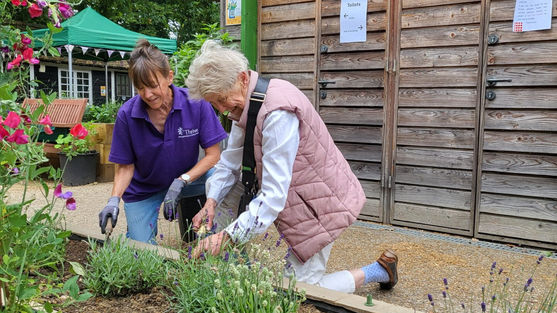
Disabled people and those with ill health are significantly boosting their mental wellbeing through therapeutic gardening, fresh independent evidence reveals.
A new Social Return on Investment (SROI) study commissioned by Thrive, a charity helping people to improve their health and transform their lives through gardening, found that Social and Therapeutic Horticulture (STH) delivers life-changing outcomes for individuals and measurable social value.
The benefits extend beyond the individual onto their support network of carers, family and friends as well as volunteers who all experience positive change. Improved mental wellbeing, social connection and carer respite are among the top outcomes.
While health systems are searching for ways to improve results, reduce inequalities and deliver more preventative care, under intense financial pressure, people are achieving incredible outcomes through therapeutic gardening.
As a community-based intervention, it improves health and wellbeing, strengthens social connections and helps people lead fuller, more connected lives, all while generating significant value for society.
The independent study estimates that £14.1 million of social value was created through STH programmes from an investment of £1.79 million, equating to £7.92 for every £1 invested.
58% of this value is generated for Client Gardeners, while together carers, families, friends and volunteers account for the other 42%, demonstrating the ripple effect of therapeutic gardening throughout communities.
Mental wellbeing emerged as the most significant outcome at 61% of the total social value created. An overwhelming 98% of Client Gardeners reported improvements in their mental wellbeing.
Yet many disabled people and those with ill health and disadvantage cannot access a simple activity like therapeutic gardening that could help them transform their lives and achieve the things that matter to them.
Behind the statistics are hundreds of people whose lives have changed. One of those people is Vicki who found support for her mental wellbeing while living with multiple sclerosis and depression.
“I don’t have anyone on the outside and I spend most of my days alone,” Vicki explains. “Thrive has been a huge part of changing that. Even though it’s only one day a week, it changes everything. I have something to look forward to and after, I find myself taking on challenges at home that I would normally avoid.”
For carers, the impact is equally important driven by improved mental wellbeing and reduced worry about the person they care for, alongside significant value of respite time. The study found that Thrive generated more than 90,000 hours of respite over the period assessed, giving carers valuable time away from caring responsibilities which they benefitted from as a result.
Volunteers also reported benefits from their involvement. Alongside the practical contribution they make, many reported improvements in wellbeing, confidence, skills and connection with nature.
As the Government and NHS seek to shift care closer to communities and place greater emphasis on prevention, Thrive CEO Ben Thomas believes the findings demonstrate that therapeutic gardening could address critical national challenges.
"Every day, we see people achieve things they once thought impossible, and this study shows that the impact reaches far beyond the individual. At a time when health and social care services are under significant pressure, therapeutic gardening is a powerful tool and highly cost-effective way to support people to live well. Through greater investment and stronger referral pathways from health, social care and community services, many more people, just like Vicki, could experience its life-changing benefits.”
The Social Return on Investment Study, conducted independently by Bean Research, examined work across Thrive’s centres in Reading, London and Birmingham, involving 682 Client Gardeners, their carers and volunteers over a two-year period.
The findings evidence that therapeutic gardening delivers both incredible outcomes for people and measurable value for society, highlighting the need for greater investment.
Read the full Social Return on Investment Study